
Ecology and Evolutionary Biology (EEB)
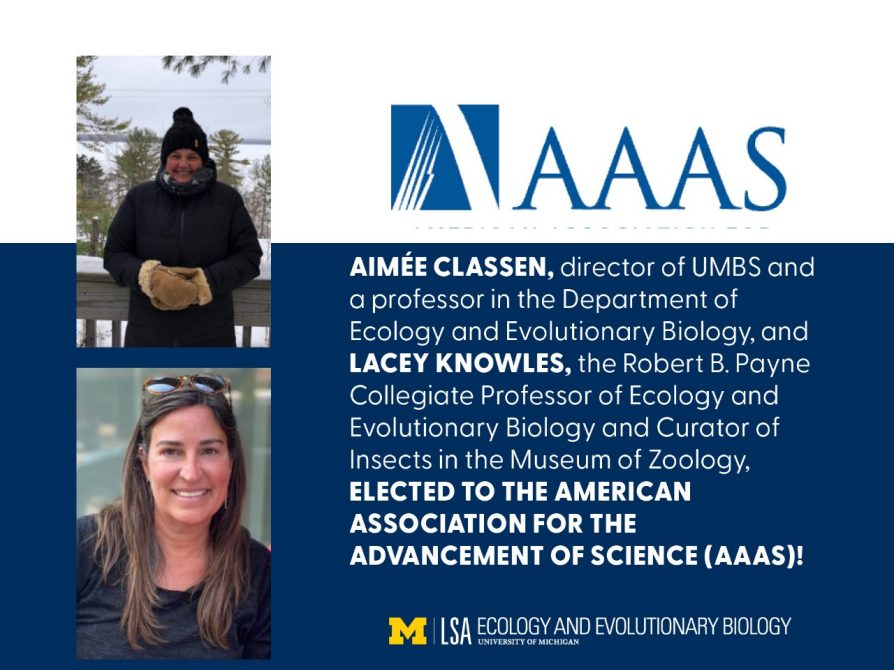
- Slide 0
- Slide 1
- Slide 2
Recent news
The Record: Four from U-M to join American Academy of Arts and Sciences
Four University of Michigan faculty members have been selected to join the American Academy of Arts and Sciences for their significant contributions in scholarly and professional fields.

University of Michigan Faculty, Aimée Classen and Lacey Knowles, Elected as AAAS Fellows
Congratulations to Aimée Classen and Lacey Knowles!
RESEARCH FEATURE
Michigan News: Vast DNA tree of life for flowering plants revealed by global science team
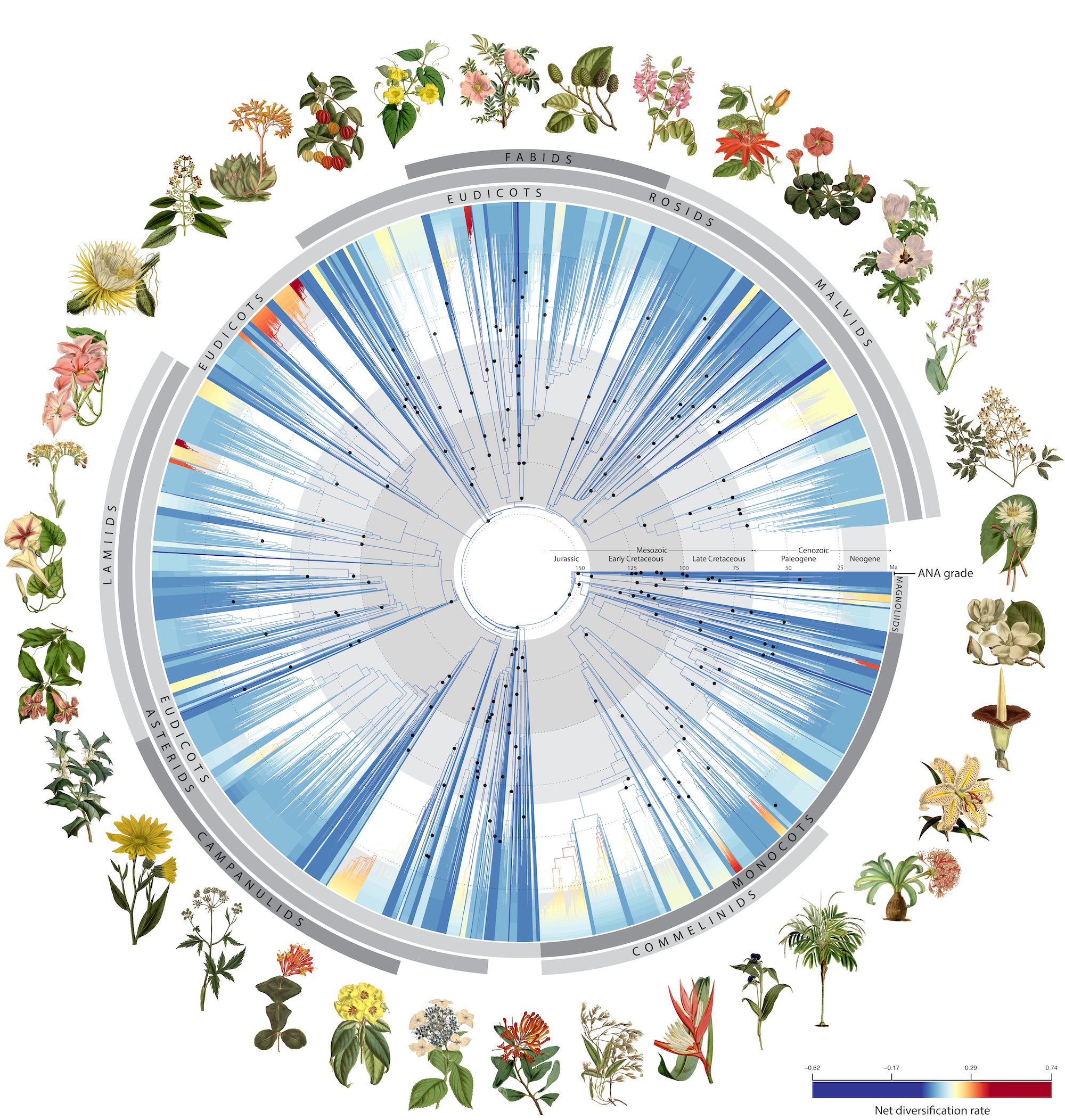
Scientists use 1.8 billion letters of genetic code to build groundbreaking tree of life!
The most up-to-date understanding of the flowering plant tree of life is presented in a new study published today in the journal Nature by an international team of 279 scientists, including three University of Michigan biologists.
Using 1.8 billion letters of genetic code from more than 9,500 species covering almost 8,000 known flowering plant genera (ca. 60%), this achievement sheds new light on the evolutionary history of flowering plants and their rise to ecological dominance on Earth.
We strive to support our students and faculty on the front lines of learning and research and to steward our planet, our community, our campus. To do this, EEB needs your support.
