
Frankel Center for Judaic Studies
- Slide 0
- Slide 1
- Slide 2
- Slide 3
- Slide 4
- Slide 5
Recent News
Announcing the 2024-25 Frankel Institute Fellows
In the upcoming academic year, the Frankel Institute for Advanced Judaic Studies will focus on the theme of Jewish/Queer/Trans
2024 Judaic Studies Graduation
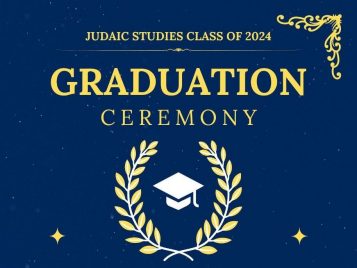
The Jean & Samuel Frankel Center for Judaic Studies invites you, your family, and friends, to the 2024 Judaic Studies graduation. Please join us in celebrating the accomplishments of our graduates.
"Because learning leads to action"~Talmud Kiddushin 40b
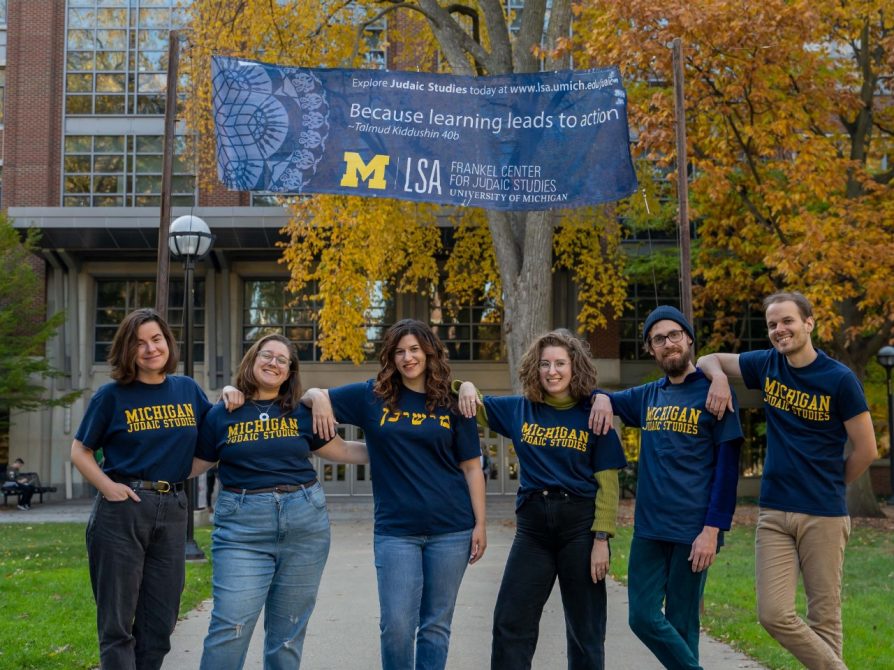
Judaic Studies explores its key themes in an interdisciplinary fashion, using the tools of history, law, literature, and culture to investigate the broad sweep of nationhood, religion, language, and space.
Judaic Studies offers courses and degrees that help you engage in the world and plan for your future. Students examine the histories, cultures, and languages of the Jewish people. Working closely with distinguished faculty and prominent visitors, students develop individual responses to complex issues like religious faith, culutral pluralism, ethnic identity, and migration.
Quick Links
We strive to support our students and faculty on the front lines of learning and research and to steward our planet, our community, our campus. To do this, the Frankel Center for Judaic Studies needs your support.
