
Research museums
The University of Michigan's natural history research museums are among the preeminent university museums in the United States and many faculty in EEB are jointly appointed with one of these units. The organismal and genetic materials in these collections are a significant part of the global record of life on Earth, providing a crucial resource for research and teaching about biodiversity, now and into the future. The museum units are responsible for conducting research and teaching on all aspects of biodiversity, developing and maintaining the collections, developing biodiversity databases based on the collections, loaning specimens, making identifications, collaborating with state, federal and international agencies in regard to conservation, taxonomy, and other concerns and answering questions from the public. The collections from the research museums listed below are located in the Research Museums Center, five miles south of central campus at 3600 Varsity Dr.
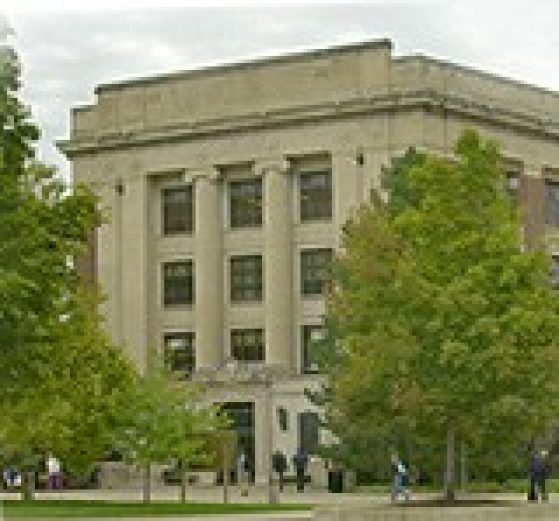
The Museum of Zoology
has over 15 million specimens, with extensive collections in insects, mites, mollusks, fish, amphibians and reptiles, birds and mammals. Additional curated materials include osteological preparations, frozen tissues for molecular work, and sound recordings for birds, insects and amphibians. Collections are housed in the Research Museums Center, five miles south of central campus on Varsity Dr.

The Herbarium
has over 1.7 million specimens of plants, fungi and algae, with especially comprehensive collections in special strengths in Michigan and the Neotropical flora. The collections are housed in the Research Museums Center, five miles south of central campus on Varsity Dr.
The Museum of Paleontology
houses the fourth largest university collection of fossil materials in the United States, with special strengths in paleobotany, Michigan Basin Paleozoic invertebrates, Permo-Triassic reptiles, Paleocene-Eocene mammals, and Plio-Pleistocene mammals and fishes. Facilities include modern preparation facilities and a morphometrics laboratory. The museum collections are located in the Research Museums Center, five miles south of central campus on Varsity Dr.
Field facilities
The university owns and maintains a number of field sites in Michigan for research and education; these are described below. In addition, many EEB faculty and graduate students conduct research at field sites around the U.S. and the entire world, using a rich array of national and international resources. See individual faculty pages for descriptions of their research.
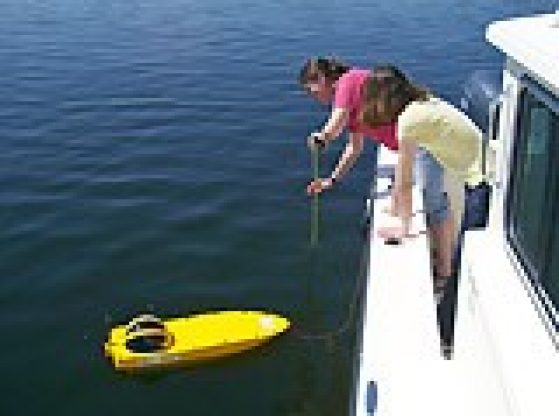
The University of Michigan Biological Station (UMBS)
has been dedicated to education and research in field biology and environmental science since 1909. The UMBS administers summer course and research programs for undergraduate and graduate students and manages 10,000 acres of undeveloped land near Pellston in northern lower Michigan, along with an approximately 3,000 acre Chase Osborn Preserve on Sugar Island, in the straits between Lake Superior and Lake Huron. These holdings, together with other public lands in the region, contain a rich diversity of natural habitats. Research facilities at UMBS include greenhouses, an underground soil laboratory (Biotron), towers for measuring forest-atmosphere gas exchanges, an experimental stream laboratory, an analytical chemistry facility, U-M satellite library, and a well-equipped stock room.
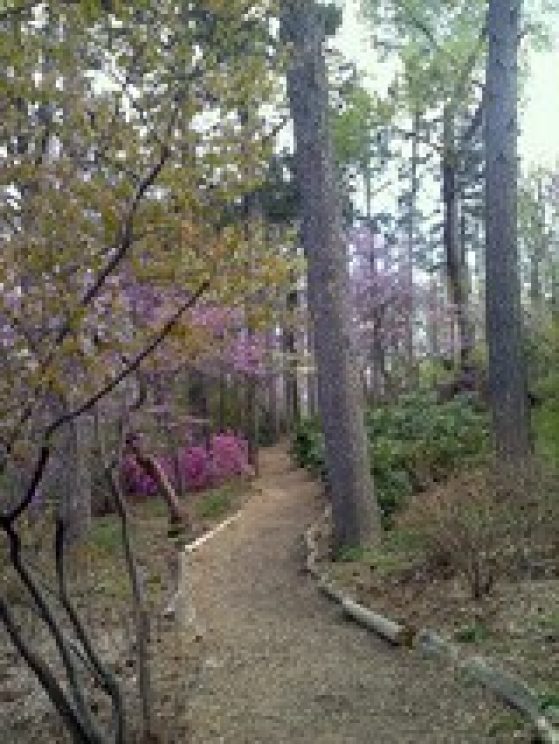
The Matthaei Botanical Gardens and Nichols Arboretum
consists of a 350-acre site on Dixboro Road near the Ann Arbor campus, a 123-acre site adjacent to central campus, and two other research and teaching areas comprising an additional includes four large greenhouses for research and teaching, a laboratory-classroom building, service and utilities buildings, protected common garden areas, and a rich diversity of habitats for field research. The Nichols Arboretum site includes a visitor center/classroom/administrative building, and a mosaic of gardens and woody plant collections as well as managed woodlands and prairie.
Map: U-M research properties near A2
The Edwin S. George Reserve (ESGR)
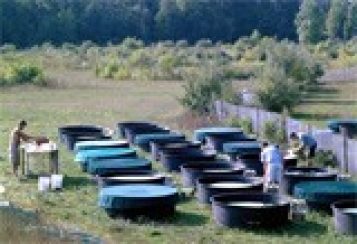 is a 1400-acre tract of land located 25 miles northwest of Ann Arbor and administered by the university as a nature reserve and biological research station since 1930. It has a wide variety of natural habitats, an extensive experimental pond facility, living quarters, laboratory and storage space, and a weather station. The main portion of the ESGR is fenced to permit the safe conduct of experimental programs that otherwise would be sensitive to public intrusion. The ESGR is home to a number of long-term studies of plant succession and population and community dynamics of white-tailed deer, amphibians, turtles and insects.
The Newcomb Tract
is a former farm on the southwest side of Washtenaw County, approximately 19 miles from Ann Arbor. The area contains a large variety of habitats in a relatively small area (206 acres) and its close proximity to Ann Arbor makes it highly useful for local research or teaching.
Laboratory facilities
In addition to the outstanding facilities in individual faculty research laboratories, faculty and students in EEB have access to a number of shared-use laboratory facilities on the Ann Arbor campus.
The DNA Sequencing Core Facility
at the Medical School provides access to high quality automated DNA sequencing technology on a recharge basis. Turn-around times are usually within 48 hours and costs per sample are reduced for EEB faculty and students.
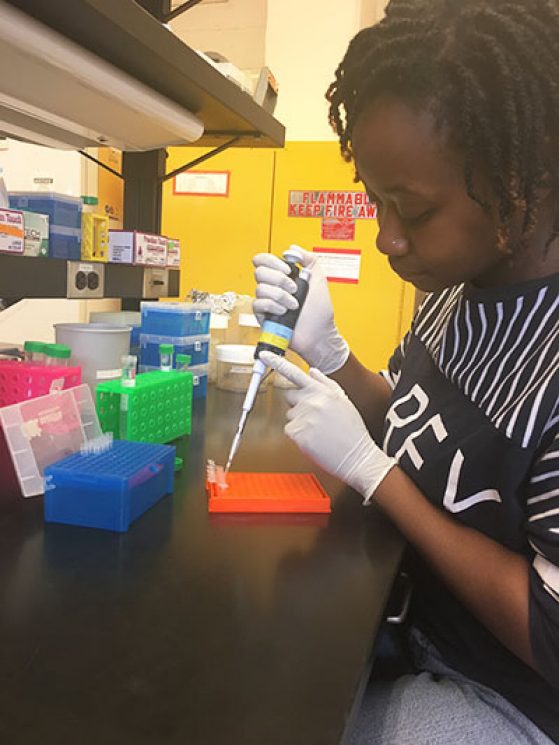
The Biodiversity Lab is a general purpose multi-user facility at the University of Michigan aimed at supporting research activities of students, faculty and visiting scholars from the Department of Ecology and Evolutionary Biology. The Biodiversity Lab is equipped to perform molecular techniques involving traditional and next generation DNA/RNA sequencing. The lab also houses Macs and PCs for data analyses. The Biodiversity lab is located in the Biological Sciences Building and its satellite facility is in the Research Museums Center. For information on how to use the lab, please contact Jillian Myers.
The Undergraduate Science Building
built in 2006, provides an innovative, technology-rich instructional facility for undergraduates. In 2006, MCDB teaching labs and some biology labs were moved to the third and fourth floors of USB. In the summer of 2010, the rest of the biology labs and most EEB teaching labs from the 1908-built section of the Chemistry Building moved to USB, bringing together EEB, MCDB and the Program in Biology. the new, larger laboratories feature better space utilization, are better equipped for students and instructors, have improved layouts without large pillars obstructing views, moveable tables and chairs, wireless and hard-wired Internet, integrated DVD/VHS/Internet/computer/sound system, whiteboards, computer drawing tablets, improved climate control and lighting, and key code entry allowing students expanded access to work on projects. The newfangled labs are located on the second floor of USB. All of the educational lab services staff are together in USB and the majority of EEB's undergraduate labs are consolidated in USB.
Just over one half of the building accommodates teaching laboratories for biology, EEB and MCDB as well as interdisciplinary science instructional space and support. The building is approximately 140,000 gross square feet on four floors. It is situated above the Palmer Parking Structure in the central Palmer Drive Development.
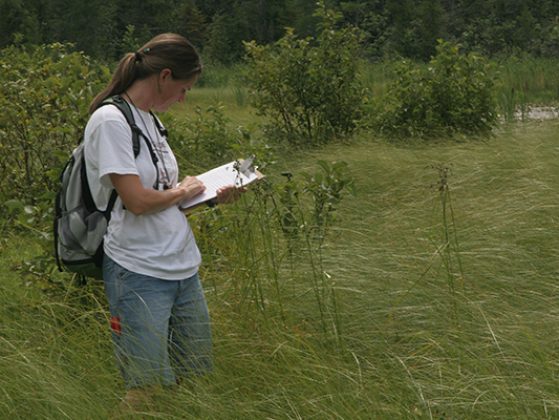
In Mud Lake Bog
the trail leads first across a field, then descends into an extensive swamp forest. During wet periods the swamp may be flooded. By following blue marks painted on trees, you will arrive at the bog proper, which surrounds Mud Lake. The bog has large floating mats and much poison sumac. Marshes can be found on the west side of the bog. The bog is located near Whitmore Lake, in Washtenaw County. Travel out of Ann Arbor north on U.S. 23. Turn west onto Barker Road. After about one mile, the road bends sharply to the left and then to the right. About one-quarter mile beyond this point, there is a house on the left. Nearly opposite this house is a pair of posts with a chain between them. There is no sign posted. A trail starts at the posts and provides access to the bog. This property is administered by the Botanical Gardens. Contact Director Tony Kolenic for research use possibilities. A map is available.
